

Ensuring voluntary consent and selecting a suitable family for each child
During the National Assembly discussion on the draft Law on Adoption (amended) on the afternoon of November 2nd, National Assembly Deputy Cil Bri (Lam Dong) suggested that consultation, explanation, and consultation should be conducted using language and methods that those being consulted can understand. Drawing from the practical experience of ethnic minority communities and remote areas, the deputy emphasized the need to ensure voluntary consent, the selection of a suitable family for each child, the preservation of information about the child's origin, and continued support for the child after adoption.
Ensuring voluntary consent based on full understanding
Agreeing with the need to amend the Law on Adoption, National Assembly Deputy Cil Bri expressed concern about whether parents and children understand their decisions, have access to procedures, and are protected after adoption, especially in ethnic minority areas and remote regions of Lam Dong province.
Commenting on Article 20 of the draft Law, delegates agreed with the requirement for full consultation on legal consequences, ensuring voluntariness and considering the wishes of children in accordance with their age and level of maturity. However, the consultation should be linked to the practical understanding of the person being consulted.
According to the delegates, in some hamlets and villages, parents and children often use their ethnic language in daily life. If explanations are only given in standard Vietnamese and signatures are obtained, people may not clearly distinguish between giving their child up for adoption and temporarily entrusting their child to someone else's care, especially when the family is facing difficulties.
Based on that reality, the delegates proposed adding to Clause 3 of Article 20 the principle that consultation, explanation, and consultation must be conducted using language and methods that the person being consulted can understand; appropriate to the child's age and level of maturity; and with language and psychological support when necessary.
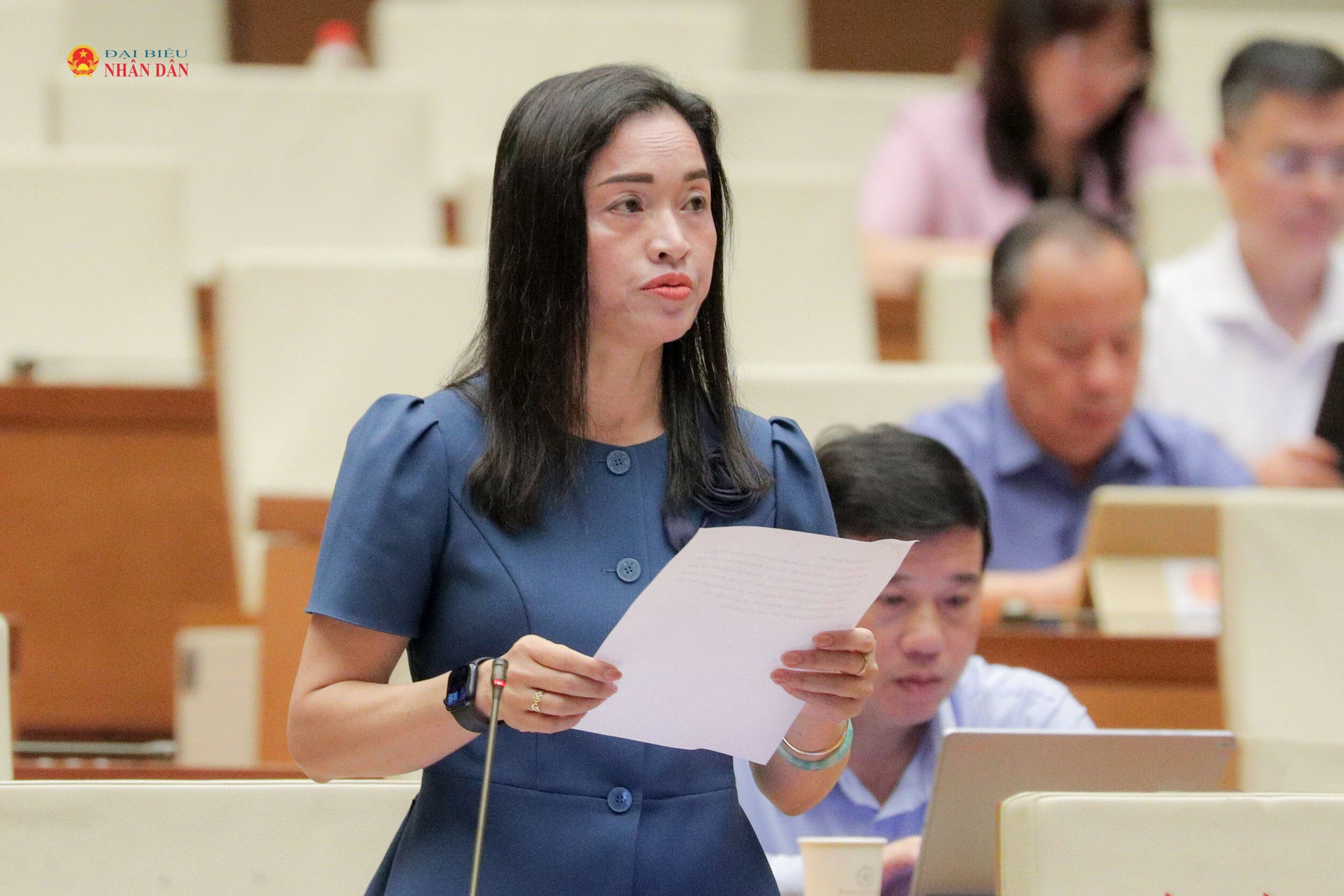
The delegates emphasized that this is a core condition of voluntary consent and should be stipulated in the Law; the specific method of implementation could be left to the Government to regulate.
At the same time, in Article 24, the representative suggested clarifying the responsibility for mobilizing objective support personnel, ensuring confidentiality and avoiding conflicts of interest; and preventing families from having to find interpreters and bear the costs themselves.
Choosing the right family, protecting the child after handover
Regarding Clause 3, Article 21 of the draft Law, Representative Cil Bri stated that the draft has added cultural, ethnic, religious, linguistic factors and the specific needs of children. The representative suggested that the assessment should link the specific needs of each child to the capacity of the adoptive family to meet those needs, especially in supporting the child's adaptation in terms of language, culture, health, and maintaining appropriate relationships with relatives.
The delegates clarified that this proposal does not aim to impose a condition that children can only be adopted by families of the same ethnic group, but rather to select the family that best serves the child's best interests, while also helping adoptive parents prepare adequately for care and upbringing.

Regarding Article 7, delegates agreed with the requirement to permanently archive adoption records, but noted that long-term archiving alone is insufficient if the information is incomplete or inaccurate. Therefore, it is necessary to clarify the responsibility for ensuring that records are complete, truthful, and traceable; unverified information must be recorded accurately, without speculation, in order to complete the records.
When establishing detailed regulations, it is necessary to clearly define the point of contact for guiding adopted children in tracing their origins, while also protecting the privacy of those involved... "The records created today could be the path for someone to find their roots many years later," the representative emphasized.
Commenting on Article 8, delegate Cil Bri suggested that when providing guidance on implementation, the responsibilities of the relevant agencies in proactively accessing and coordinating data verification should be clearly defined; citizens should not be required to resubmit documents that are already available and can be accessed electronically.
In cases where data is not synchronized, a coordinated processing method is needed to avoid requiring people in disadvantaged areas to make multiple trips. Along with online public services, it is necessary to maintain direct reception and guidance for those who do not have the means to use technology.
Regarding Articles 22 and 24, delegates agreed with the need for monitoring and evaluation to support and protect children after adoption. They also proposed clearly defining the contact point for receiving reports when children have difficulty integrating or show signs of abuse; and the responsibilities for coordination between the commune level, schools, and social workers to promptly connect them with psychological, medical, and educational support.
The delegates noted that support must be provided discreetly, protecting privacy and preventing children from being discriminated against because they are adopted.
Emphasizing that every child needs a safe and stable home, National Assembly Deputy Cil Bri stated that consent must begin with full understanding; adoptive families should be selected according to each child's needs; information about origin must be kept truthful; and convenient procedures must be accompanied by clear support responsibilities... "Handing a child over to a new family is also when the responsibility of accompanying them needs to be continued," the deputy stressed.