

Develop a specialized program on behavioral skills and prevention of school violence
Behind every act of violence lies the issue of school discipline, emotional control skills, behavioral culture, and the educational responsibilities of family, school, and society. Emphasizing this, National Assembly Deputy Hoang Van Tuyen (Hai Phong City) proposed that the Ministry of Education and Training develop a specialized program on behavioral skills and the prevention and control of school violence.
Education cannot simply deal with the consequences
Expressing concern about school violence, National Assembly Deputy Hoang Van Tuyen ( Hai Phong City ) stated that we often only truly pay attention to school violence after a serious incident occurs. Only when students fight and film it and post it online; when students insult or assault teachers; when a minor conflict escalates into a serious incident, do we begin to look for the causes and responsibilities.
“Education cannot simply be about dealing with the consequences. More importantly, it must be about prevention from an early age and in the long run. A student's violent behavior doesn't just appear out of nowhere. Behind it could be accumulated conflicts, psychological problems, academic pressure, influences from the family environment, social media, or simply that the students haven't been adequately equipped with the skills to control their emotions and resolve conflicts,” Representative Hoang Van Tuyen analyzed.

Representative Hoang Van Tuyen emphasized that preventing school violence must become a regular, clearly defined responsibility within schools, instead of just raising awareness when incidents occur. Based on this, the Ministry of Education and Training needs to develop a specialized program on behavioral skills and the prevention and control of school violence; and research regulations requiring a minimum of one session per month, within the existing class activity and experiential learning time, appropriate to each educational level, without increasing class time.
These sessions should not only focus on reminders like "don't fight," but should also help students identify violence, understand its legal and psychological consequences, learn to control their emotions, resolve conflicts, and seek help when being bullied or when they notice a friend at risk of committing violence. In particular, real-life scenarios should be presented for students to discuss, teaching them how to react when insulted, witnessing bullying, having disagreements with teachers, or being provoked on social media, preventing minor conflicts from escalating into violence.
"Most importantly, students must understand that controlling anger is not a sign of weakness; not using violence to resolve conflicts is a manifestation of character and maturity," the delegate emphasized.
Preventing and combating school violence must be a part of human education
The delegates also stated that students need to be taught a very clear principle: no one has the right to use violence to resolve disagreements. Serious acts of violence must be dealt with strictly according to the law.
The delegates also noted that strict punishment does not mean abandoning the goal of education. For students, especially minors, in addition to responsibility for their actions, there needs to be a mechanism for them to recognize their mistakes and correct them.
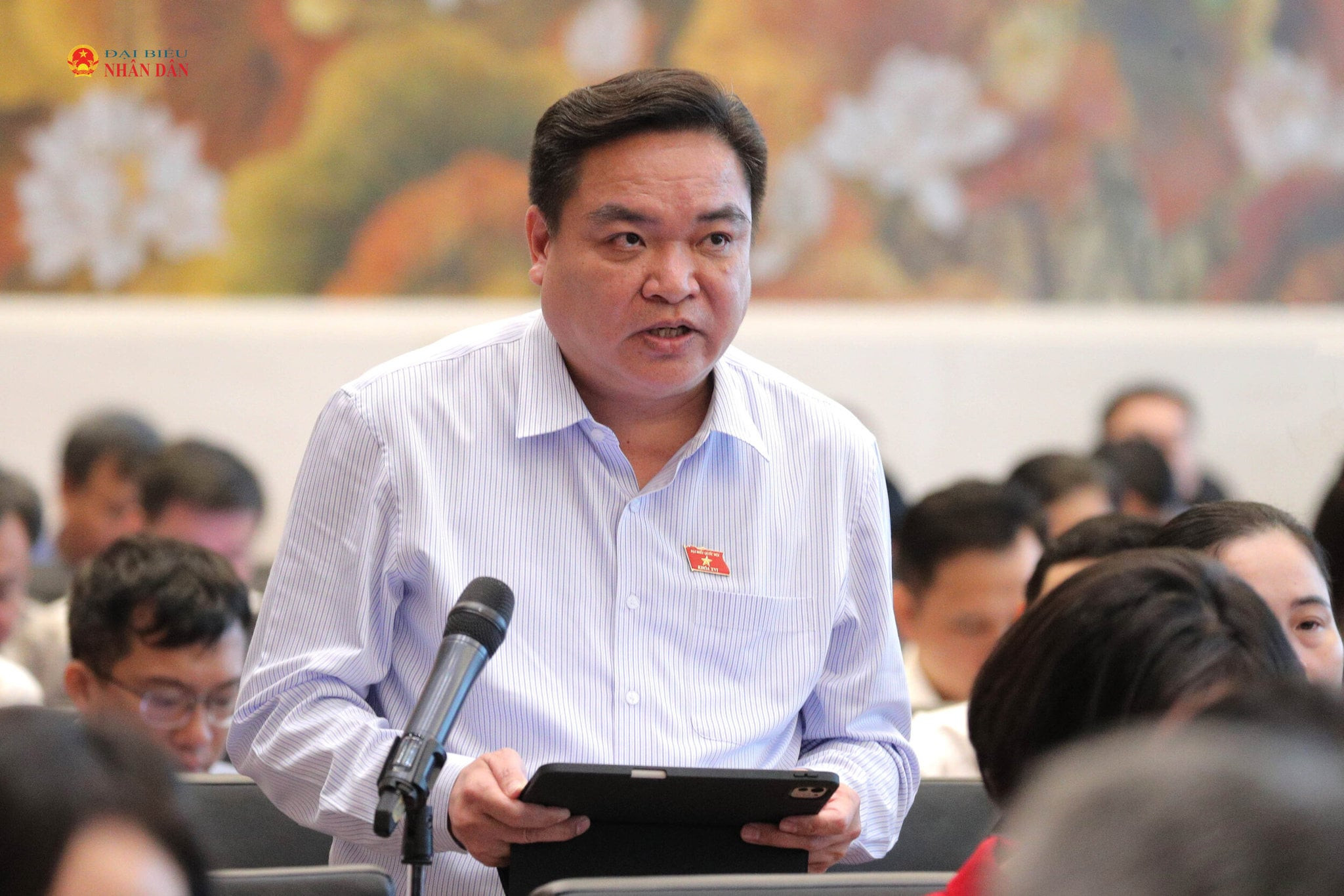
According to delegate Hoang Van Tuyen, preventing and combating school violence should be a part of human education, not just a task of ensuring security and order in schools.
"We are spending a lot of time teaching students knowledge. But if a student can achieve very high grades but doesn't know how to control their anger, doesn't know how to respect others, doesn't know how to resolve conflicts, and doesn't know how to seek help when they encounter problems, then that education is not truly comprehensive," the representative analyzed.
Therefore, the delegates proposed that the Government direct the Ministry of Education and Training to conduct specific research on the content, duration, and methods of organizing thematic activities, as well as the responsibilities of schools in implementing them; and at the same time, establish a mechanism for evaluating effectiveness, using the changes in students' awareness, behavioral skills, and ability to prevent violence as a measure.